
India Leads the Rise of Online Medical Consultation Worldwide
In recent times, medical care has seen a fundamental change. The convergence of technology with medicine has created new avenues of diagnosis, treatment, and patient interaction. One of the most important developments is the emergence of online medical consultation, popularly known as telemedicine. For foreign patients — particularly those in need of affordable and specialized medical care overseas — online consultation is a game-changer. No longer must patients travel to get world-class expertise; all it takes is a phone or laptop. And at the epicenter of this online healthcare revolution stands India, becoming a world capital of virtual medical treatment. The Increasing Demand for Online Medical Consultation Access to healthcare has historically been geographically, infrastructurally, and financially restricted. Patients from resource-poor nations commonly seek out distant nations in order to be treated for conditions that are unavailable at home. International treatment does come with high expenses, lengthy wait times, and logistical hassles. Online consultation addresses most of these issues by enabling patients to: These advantages render telemedicine especially worth it for international patients organizing their medical trip with precision and a sense of calm. What is an Online Medical Consultation? Online consultation is an online communication between a patient and a healthcare professional through video calls, voice conversations, or safe messaging. On these platforms, physicians can : This is not just limited to primary care — numerous experts in specialties such as cardiology, orthopedics, oncology, neurology, fertility, and others are now providing virtual consultations, even for complicated diseases. Why India Is Becoming a Global Hub for Telemedicine India has been renowned for its prowess in medical tourism for a long time — famed for the quality of care, internationally qualified physicians, and affordable treatment. Today, with digital healthcare moving ahead, India is also emerging as a virtual healthcare delivery leader. This is why India is at the forefront of online medical consultations: 1. Well-qualified experts at hand India has a large number of specialists in exotic disciplines, of which the majority are trained or certified outside the country. For the first time, international patients can now approach such specialists directly — no go-betweens and no waiting necessary. 2. Inexpensive Virtual Services Compared to European, Middle Eastern, or North American healthcare systems, the cost of a full online consultation in India is significantly less. Patients can access specialist advice for a tiny percentage of what otherwise might have been paid — and in some cases even with shorter waiting times as well. 3. Sophisticated Digital Infrastructure Some Indian healthcare providers and hospitals are embracing easy and secure telemedicine platforms. The platforms facilitate high-definition video consultations, secure sharing of medical data, and electronic prescriptions, which offer a secure and easy experience to global patients. 4. Global Availability and Language Support India’s multilingual and culturally rich health setting is characterized by English-speaking physicians who have been trained to communicate with foreign patients, thus one of the biggest obstacles to foreign medical treatment is eliminated. How Online Consultation Empowers International Patients For those looking for treatment overseas, online consultations have a number of unique benefits: ✅ Early Medical Insight Patients are able to pre-refer their case history and medical records, receiving clarity on diagnosis, treatment, and the direction forward — all before they depart. ✅ Second Opinions In severe cases, patients go for a second opinion prior to receiving full treatment or surgery. Patients are able to obtain other opinions from qualified doctors using online consultations and make informed choices. ✅ Treatment Design Online visits assist patients in knowing: Rough estimates This openness minimizes the likelihood of unforeseen costs or delays upon arrival. ✅ Follow-up Without Travel Follow-up is required post-surgery or prolonged treatment. Online consultation allows cross-border patients to stay in contact with the treating doctor from home, as opposed to taking another long-distance flight. Virtual OPDs: A New Model for Patient Care All medical practitioners are now offering Online OPD services, mainly for foreign patients. These are structured consultation sessions where patients can book appointments with physicians of various specializations through a virtual gateway. Online OPDs help address: This model allows even remote or underprivileged communities’ patients to access quality medical consultations. The Global Medical Tourism Impact The integration of medical tourism and e-consultation is creating a unique model of healthcare. Here’s how: Stage Traditional Model Online-Enabled Model Early Diagnosis Needs travel Virtual consultation Treatment Planning Upon arrival Done before arrival Hospital Choice Based on agent According to expert recommendation Follow-up Care Return trip Web review This shift is becoming more patient-focused, transparent, and streamlined in terms of medical tourism. It allows patients to book their travel only when absolutely necessary — most often after proper virtual screening and counseling. Challenges and How India Is Meeting Them No system is perfect. But India is actively attempting to solve problems like: With such solutions, India continues to be the world’s benchmark for telemedicine services. Hybrid and borderless is the future of healthcare Remote consultation is no longer a luxury or an emergency decision — now it is emerging as a cornerstone of the global healthcare system. With developing technology and the growing availability of digital healthcare, patients all over the world will more and more turn to virtual treatment as the initial point of care. India’s triple threat of medical expertise, affordability, and digital readiness makes it a preferred destination not only for in-clinic care but also for online consultation and international patient care. Conclusion The virtual medical consultation is revolutionizing how people receive care beyond their borders. It places timely specialist medical care at the doorstep of the patient who, otherwise, would have to suffer delay, expense, or uncertainty. India’s dominance in this area is fueled by its storehouse of clinical expertise, technical capabilities, and patient-centered attitude. With the health universe becoming increasingly global,
Essential Guide to Safely Accessing Top Medical Treatment in India (2025)
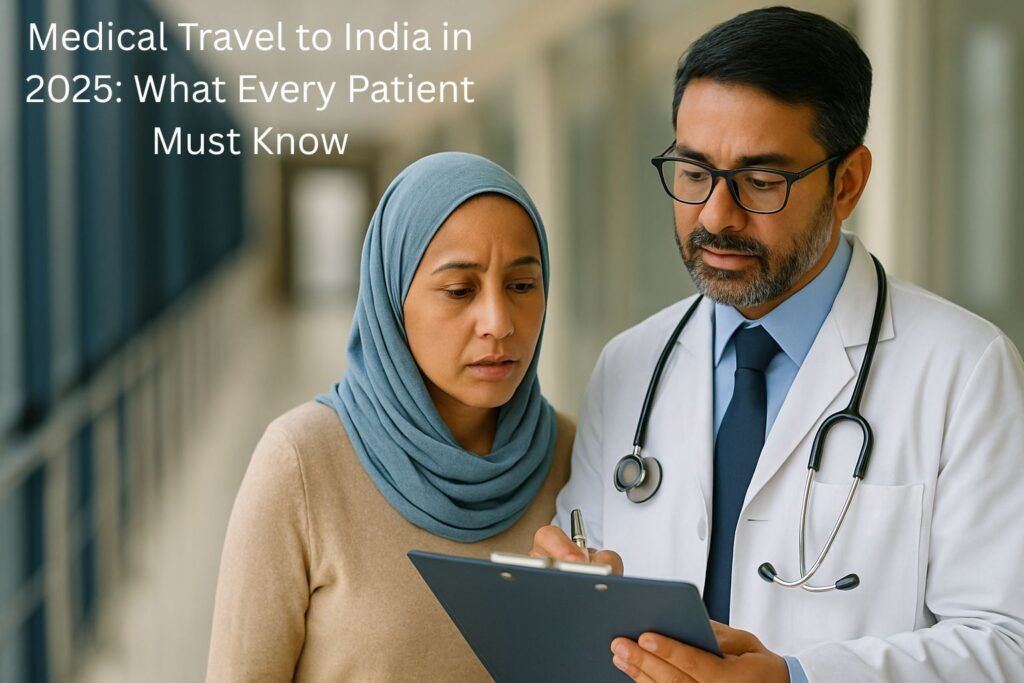
Planning medical treatment in India in 2025? Discover essential travel tips, visa info, cost details, and what international patients should expect from Indian hospitals. If you are considering visiting India for medical treatment in 2025, here are some things to bear in mind. India’s increasing popularity as one of the world’s premier medical tourism hubs is drawing thousands of patients per month from nations such as Nigeria, Iraq, Kenya, Uzbekistan, and Bangladesh. Although the prospect of well-priced, high-quality care is indeed enticing, most patients are left somewhat unprepared for the whole experience of having medical treatment overseas. This manual is here to offer you practical and insightful tips geared towards international patients thinking about undergoing treatment in India. We’ll address all you need to do, from the paperwork required to learning about cultural disparities, hospital coordination, and recovery planning after treatment. 1. Familiarize yourself with the Indian Healthcare System before you arrive In contrast to some Western healthcare systems that enable a general practitioner (GP) to refer patients to specialists, India facilitates direct specialist access. This implies: Prior to your trip, ask for the hospital treatment plan and estimate so you know exactly what services will be offered and what the cost range will be. 2. Bring Documents in Advance To have a smooth experience, bring along the following documents: Make sure your e-Medical Visa application is complete. Numerous patients make the mistake of seeking a tourist rather than a medical visa, which may postpone or make treatment more difficult. 3. Accompany a Travel Companion—but Understand Their Role The majority of patients can bring one attendant with them, which is allowed under the policy of Indian e-Medical Visa. Your companion might not always get to enter the operating theatre or ICU but will usually be granted entry into waiting areas, food courts, and lounges. For prolonged situations such as cancer or transplant, hospitals might assist in affordable stay alternatives close by for attendants. 4. Language, Culture & Food: What to Expect Language: English dominates in Indian hospitals, but regional accents and fast speech might be a problem for some. Most big hospitals offer translators for Arabic, French, Russian, or African languages, particularly in metro cities like Delhi and Chennai.Cultural standards: Indian medical professionals are courteous but professional. Don’t think twice if your physician responds in short but direct sentences; it is not impolite but efficient.Food: Most Indian hospitals provide personalized diet plans. If you are from a country with varying eating habits (e.g., Halal, vegan, diabetic diets), give the hospital advance notice. You can also carry packaged meals from your country. 5. Payment Models: Understanding the System Indian hospitals typically have a prepaid model: International bank transfers, debit/credit cards, and occasional cash (with restrictions) are accepted by most hospitals. Explanation on this beforehand avoids surprise at the last minute. 6. Treatment Duration vs. Stay Duration It is common for patients to grossly overestimate the overall duration of stay. For example: Treatment Type Hospital Stay Suggested Stay in India Heart Bypass Surgery 7–10 days 15–20 days (including recovery) IVF Cycle OPD visits for 10–15 days 25–30 days Cancer Chemotherapy Day care or 3–5 days cycles Repeats many times Organ Transplant 10–20 days hospital stay 45–90 days Follow-up reviews, recovery, and diagnostic tests may consume extra days, so book your tickets accordingly. 7. Leverage Technology for Pre-Consultation India’s best hospitals now conduct video consultations before you leave. Make the most of this by: Teleconsultation platforms or facilitators can schedule these for you easily. This saves uncertainty and avoidable costs. 8. Post-Treatment Follow-up: Think Long-Term After you get back home, follow-up is the key. Indian doctors typically provide: Ensure your treatment provider provides online follow-up consultations. Some facilitators and hospitals have specialized international follow-up teams who can attend to this through WhatsApp, email, or video calls. 9. Legal and Ethical Principles India has a strict regulatory system for: Always go through a licensed hospital or facilitator to avoid legal complications. 10. Selecting the Right City: Align Your Treatment with the Region Not all cities provide all treatments. Here’s an overview: City Specialized In Delhi Cancer, Cardiology, IVF, Orthopedics,Oncology Mumbai Transplants, Oncology, Plastic Surgery Chennai Fertility, ENT, Cardiac Surgery Hyderabad Gastroenterology, Nephrology, Urology Bangalore Neurosurgery, Spine, Robotic Surgery Select a city not only due to hospitals but also due to your connectivity by flights, climate, and cultural inclinations. Final Thought: Plan Smart, Heal Better Medical tourism is not merely finding cheap healthcare—it’s about planning smart, selecting sensibly, and recuperating completely. As India dominates the medical tourism sector globally, well-informed patients stand to gain the most. Whether you’re considering India for fertility treatment, heart surgery, cancer care, or advanced diagnostics, knowing what to expect ensures a safe, comfortable, and successful medical journey.
Why India is the World’s Leading Medical Tourism Hub in 2025
In recent years, India has emerged rapidly as the largest medical tourism center in the world, attracting millions of international patients with accessible world-class medical care. With a combination of qualified doctors, cutting-edge facilities, low treatment costs, and holistic healing approaches such as Ayurveda and Yoga, India has become the best choice for medical tourists in 2025. What is Medical Tourism? Medical tourism refers to the practice of traveling to another country to receive medical care. In the case of India, it grew into a $13 billion industry (as of 2025), thanks to the country’s high-quality health ecosystem and lower costs. Patients from countries such as the US, the United Kingdom, Canada, Bangladesh, Nepal, Africa, and the Middle East come to India not only for treatments, but also for recovery in serene and culturally rich environments. Why Do People Choose India for Medical Treatment 1. Cost-Effective Treatment One of the biggest reasons medical tourists select India is inexpensive pricing. Complex surgeries such as heart bypass, orthopedic replacement, and cosmetic procedures in India are 60% to 90% cheaper than in Western countries. Despite the low cost, the quality of care rivals global standards. Procedure USA (Avg. Cost) India (Avg. Cost) Heart Bypass $100,000 $7,000 Knee Replacement $50,000 $6,000 IVF $20,000 $3,500 Cosmetic Surgery $15,000 $2,500 2. World-Class Medical Facilities India is home to NABH and JCI-recognized hospitals that meet tough international healthcare standards. Famous hospitals such as Apollo Hospitals, Fortis Healthcare, Max Healthcare, Medanta, and AIIMS are equipped with the latest medical technologies, robotic surgery systems, and advanced clinical equipment. 3. Highly Qualified Doctors and Specialists India has a large group of internationally trained, English-speaking doctors. Many Indian experts have practiced or studied in the US, the United Kingdom, or Europe and are members of renowned medical organizations. Fields such as cardiology, oncology, orthopedics, neurology, fertility treatments, and aesthetic surgery are particularly strong. 4. No Waiting Lists Unlike some countries where patients wait months for surgery, India offers immediate or short waiting times for treatment. Hospitals provide international patients with fast-tracked consultations and seamless pre- and post-operative care. 5. Holistic Healing and Wellness Tourism India is not just about modern medicine. It is the birthplace of Ayurveda, Yoga, Naturopathy, and other holistic therapies that support physical and mental well-being. Many tourists combine surgery with wellness retreats in Kerala, Rishikesh, or Goa to recover naturally in a tranquil environment. 6. Personalized Medical Tourism Packages India offers medical tourism packages that include treatment, hospitalization, accommodation, airport pickup, language interpreters, and even sightseeing. This makes the experience convenient and stress-free for foreign patients. 7. Government Support and Medical Visas The Indian government has simplified its medical visa process, allowing patients and attendants to stay up to 6 months with easy extensions. Initiatives such as the “Heal in India” campaign further promote the country as a global health destination. Top Medical Services and Treatments in India for Tourists India offers a wide range of medical services, with many specialized hospitals providing personalized care for international patients. Here are the most sought-after treatments: 1. Cardiac Surgery India is recognized globally for its affordable and successful heart surgeries — including bypass surgery, angioplasty, valve replacement, and pediatric heart care. 2. Orthopedic Surgery From knee and hip replacements to spine surgery, Indian hospitals offer high-tech solutions, including robotic-assisted surgeries, with shorter recovery times. 3. Cancer Treatment Indian cancer hospitals provide advanced oncology treatments, including chemotherapy, radiation therapy, bone marrow transplants, and immunotherapy at a fraction of Western costs. 4. Fertility Treatments (IVF/ICSI) With high success rates and affordable IVF packages, India has become a key destination for infertility treatment, especially for couples from the US, UK, and Africa. 5. Cosmetic and Plastic Surgery From rhinoplasty, liposuction, and hair transplants to breast augmentation, India is a preferred destination for aesthetic surgeries performed by board-certified plastic surgeons. 6. Neurology and Neurosurgery India is rapidly advancing in brain and spine surgeries, with major hospitals performing complex procedures such as deep brain stimulation, tumor removal, and epilepsy surgery. 7. Organ Transplants With a transparent donor registry and advanced infrastructure, India offers kidney, liver, and cornea transplants with high success rates. 8. Ayurveda and Wellness Programs For post-operative recovery or chronic disease management, tourists often opt for Ayurvedic detox, Panchakarma, and Yoga retreats — especially in Kerala and Uttarakhand. Best Cities for Medical Tourism in India Final Thoughts: Why India is the Future of Global Healthcare India’s position as the world’s largest and most reliable medical tourist destination is only strengthening in 2025. With its unmatched mixture of affordability, quality, accessibility, and holistic healing, India offers medical tourists not just a treatment—but a journey to complete recovery. Whether you’re looking for life-saving surgery, advanced diagnostics, or natural remedies, India provides everything with world-class excellence and heartfelt hospitality. As the global healthcare scenario evolves, India continues to lead the way in compassionate, state-of-the-art medical care.